

From Cloud FinOps to Tokenomics: Why AI Cost Governance Dominated FinOpsX 2026

FinOpsX 2026 made one thing clear: AI has changed the conversation.
In previous years, cloud cost optimization was often the headline topic. This year, discussions shifted toward AI economics, token consumption, governance and proving business value. Across keynotes, breakout sessions and conversations at our booth, FinOps, IT and finance leaders were asking the same question:
How do we scale AI without losing control of cost and value?
The FinOps Foundation even announced that next year's event will expand to include a dedicated Tokenomics track, highlighting how quickly this discipline is emerging alongside traditional FinOps practices.
Why Tokenomics Is Becoming the Next Evolution of FinOps
The strongest message from the FinOpsX keynotes was that organizations need a new framework for managing AI spending.
Just as cloud consumption became the foundation of FinOps, token consumption is becoming the foundation of AI cost management. Speakers repeatedly emphasized that AI spend is growing significantly faster than cloud spend and that token usage is expected to increase dramatically over the coming years.
For many organizations, this creates a visibility challenge. Finance teams often see invoices and usage reports, but they don't see what's driving costs behind the scenes, including model routing decisions, prompt design, context expansion, retries or agentic workflows.
The emerging discipline of Tokenomics focuses on three questions:
- Where are tokens produced?
- How are tokens consumed?
- What business value do they generate?
The message was clear: measuring AI cost alone is no longer enough. Organizations need to connect AI consumption to business outcomes.
That broader focus on business outcomes was visible throughout the event. FinOps practitioners are increasingly being asked not just to report costs but to explain total cost of ownership, demonstrate value and help guide investment decisions. As AI spending grows, the conversation is shifting from what technology costs to what it delivers.
This is where Tokenomics becomes more than a FinOps discipline. While FinOps provides the framework for measuring, allocating and optimizing AI costs, organizations also need to understand adoption, usage patterns and business value. As more AI capabilities are delivered through SaaS platforms, the lines between FinOps, SaaS Management and AI governance are starting to blur. Leaders need visibility across all three areas to make informed investment decisions.
AI ROI, Not AI Cost, Is the New Executive Conversation
One of the biggest changes we noticed compared to previous industry events was the maturity of AI discussions.
A year ago, many conversations focused on experimentation and potential use cases. At FinOpsX 2026, leaders were focused on execution.
Attendees wanted to understand:
- How to measure AI ROI
- How to balance innovation with governance
- How to select the right model for the right task
- How to prevent runaway AI spending
- How to connect AI costs to business value
Several keynote speakers reinforced that the most successful organizations are not necessarily those spending the most on AI. They are the ones that can measure outcomes, make informed decisions and steer investments toward business goals.
This aligns closely with what we heard from visitors at our booth. Organizations are moving beyond proof-of-concept projects and looking for practical ways to manage AI, cloud and SaaS investments as part of a broader financial management strategy. Many attendees described AI as a growing budget pressure rather than purely an innovation initiative. Several teams had been asked to identify savings opportunities specifically to fund new AI investments, making financial transparency and optimization more important than ever.
Another trend stood out. AI cost management is no longer a technical discussion. It has become a board-level concern. CEOs want faster innovation. CFOs want efficiency and predictable spending. Security teams want governance. FinOps is increasingly becoming the bridge between these priorities.
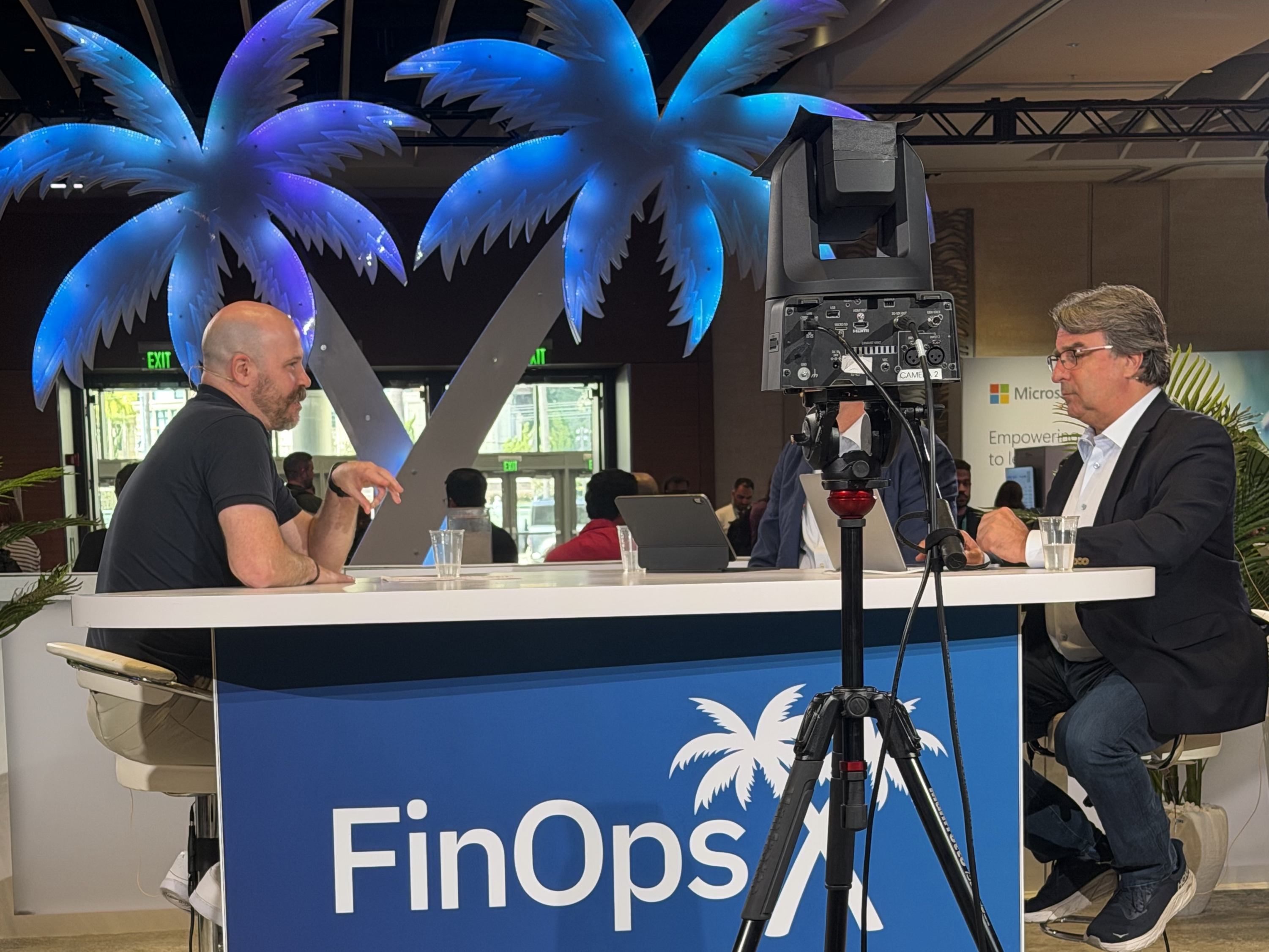
Expert Talk Live from FinOpsX 2026
USU's Robbie Plourde joined theCUBE's John Furrier and theCUBE Research's Paul Nashawaty to discuss the evolution of FinOps from cloud cost control into an enterprise discipline for AI value management and token economics. Watch the video
Visibility First: The Foundation for AI, Cloud and SaaS Governance
Whether the discussion centered on cloud, SaaS or AI, one challenge surfaced repeatedly: visibility.
You can't govern what you can't see.
But visibility alone isn't enough. A recurring challenge was trusting the data enough to act on it and translating insights into governance decisions that drive measurable results.
Many attendees described environments that continue to grow in complexity. Multiple cloud providers, SaaS applications, AI services and consumption-based pricing models create new layers of financial risk.
AI adds another challenge because pricing models are often opaque. Costs can be hidden behind credits, bundled services or complex consumption metrics.
This is creating strong demand for:
- Unified cost visibility
- Accurate allocation and chargeback
- Commitment and contract management
- AI spend tracking
- Actionable business insights
We also saw growing interest in understanding the full picture of technology consumption. SaaS Management emerged as a particularly relevant topic because it is recognized within the FinOps Framework but is often managed outside the FinOps team. Many organizations can see SaaS spend but don't directly control the contracts, licenses or application portfolios needed to optimize it. Ownership may sit with procurement, vendor management, IT Asset Management teams or application owners, making governance and collaboration critical for turning spend data into action.
Organizations increasingly want to connect cloud spend, SaaS subscriptions, AI consumption and business outcomes in a single view. This helps teams answer critical questions such as: Are employees using AI services effectively? Are we paying for licenses that create value? Are we using the right model for the right task?
These questions require data from multiple disciplines, not just FinOps alone.
A recurring theme from both keynote days was that organizations need a shared source of truth that brings together technology, finance and business stakeholders.
From Alerts to Agents: How AI Is Transforming FinOps Operations
Another major trend was the growing role of AI-powered automation inside FinOps itself.
Many vendors showcased AI assistants, FinOps agents and conversational interfaces designed to help teams investigate spend anomalies, forecast costs and identify optimization opportunities faster.
The keynote theme "Alerts to Agents" captured this shift perfectly.
The vision is moving from:
Crawl: You ask, AI answers.
Walk: AI finds information and drafts recommendations.
Run: AI investigates, recommends and takes action.
However, speakers also highlighted an important caution. AI without business context can produce technically correct but practically wrong recommendations.
The human role remains essential. FinOps professionals provide governance, accountability and business understanding. AI can accelerate analysis and surface recommendations faster than ever, but spending decisions still require human oversight. This message resonated strongly throughout the conference as organizations look for ways to balance AI-driven efficiency with financial accountability.
Organizations that succeed over the next 12 months will be those that balance speed with governance. They will empower teams to innovate while putting the right guardrails, instrumentation for visibility and accountability in place.
FinOpsX 2026 showed that FinOps is evolving beyond cost management. As AI becomes a board-level priority, FinOps teams are becoming strategic partners who help organizations understand not only what technology costs, but also what value it creates. For us, one takeaway stood out above all others: the future is not about managing cloud, SaaS and AI in isolation. Organizations need governance models that connect spending, ownership and business outcomes across all three domains.
At USU, we see growing demand for solutions that help organizations gain transparency across cloud services, SaaS applications and AI investments. Just as importantly, organizations want the governance capabilities needed to turn that visibility into action, enabling better decisions and stronger business outcomes.
Want to discuss how to gain visibility into cloud, SaaS and AI costs while keeping business value at the center of every decision? Connect with our experts and continue the conversation.