
- Home
- it asset management
- it asset cost transparency
IT Asset Cost Transparency
What is IT cost transparency?
IT cost transparency is the structured visibility and allocation of all IT-related expenses across hardware, software, cloud and services. It creates a financial baseline that enables effective IT cost optimization, improved budgeting and data-driven decision-making across the organization.
How USU IT Cost Transparency unlocks cost optimization strategies
USU IT Cost Transparency transforms financial data into actionable optimization insights. By linking asset data with cost allocation and lifecycle information, customers can:
- Identify unused licenses and redundant assets
- Detect cost shifts early across hardware, software and cloud
- Eliminate hidden lifecycle costs
- Align IT spend with business value
This enables proactive IT cost optimization instead of reactive cost reduction.
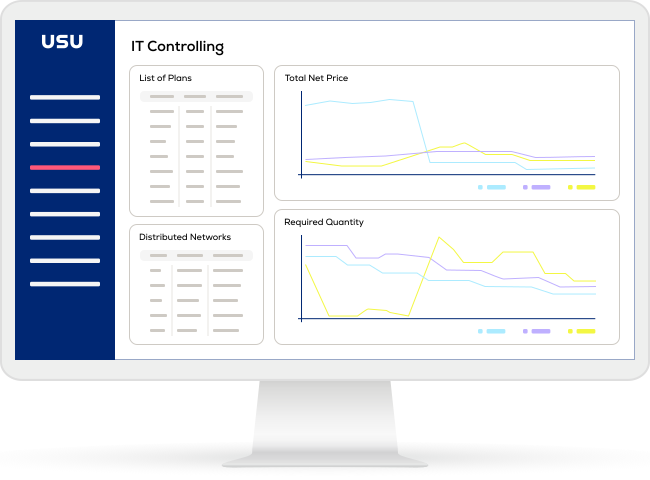
USU IT Cost Transparency software helps control IT budgets
Manage financial information
Track IT asset costs with ease
Transfer data to your system
Cost transparency empowers IT Asset Management
USU IT Asset Cost Transparency extends IT Asset Management with complete financial visibility across hardware, software, cloud and related services. It provides full traceability of IT asset costs throughout the lifecycle — from acquisition and operation to renewal and retirement.
With structured cost allocation and asset-level transparency, organizations gain clarity on where IT budgets are spent, which assets deliver business value and where optimization potential exists.
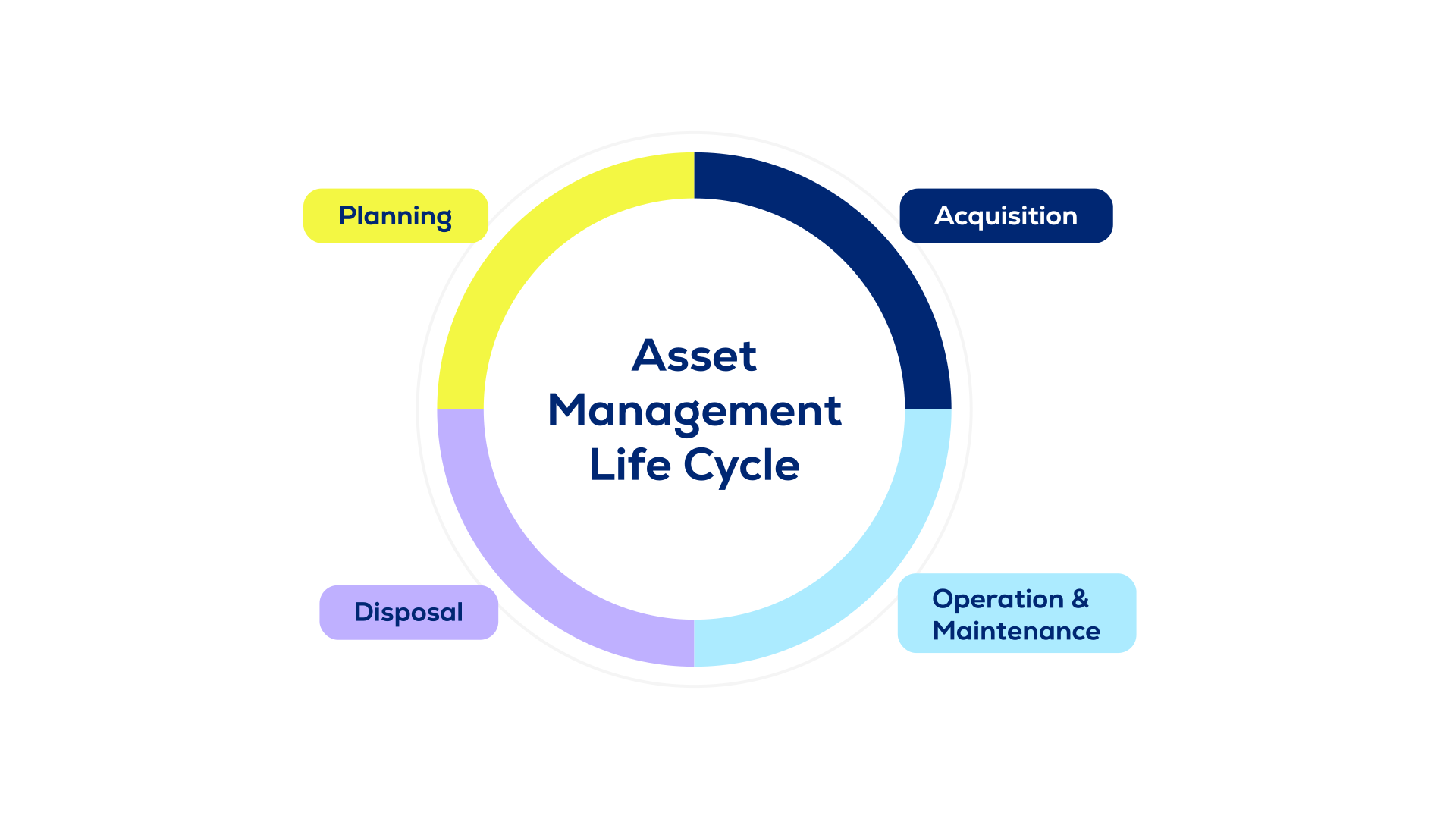
Total cost of ownership across the entire lifecycle
True IT cost transparency requires full visibility into total cost of ownership (TCO) across hardware, software, cloud and services.
From procurement and deployment to maintenance, upgrades and disposal, USU enables you to understand the real cost drivers behind your IT landscape. By combining financial data with usage insights, organizations can:
- Optimize asset utilization
- Avoid hidden lifecycle costs
- Replace underperforming assets at the right time
- Reduce waste and unnecessary spending
Comprehensive lifecycle transparency allows IT and finance teams to align budgets with strategic business priorities and drive sustainable IT cost optimization.
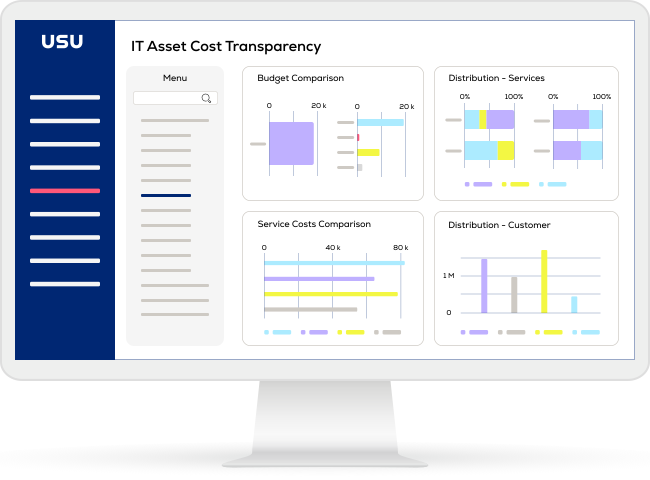
Integrate ITAM data into your IT financial management system
IT cost transparency becomes powerful when financial data and IT asset data are connected.
By integrating IT Asset Management data into your IT financial management system, you gain real-time insights into asset quantities, cost allocation and lifecycle-driven budget changes.
This enables organizations to:
- Improve IT budget planning accuracy
- Detect cost shifts early across hardware, software and cloud
- Identify savings opportunities faster
- Align IT investments with business performance
With integrated cost transparency, IT moves from reactive cost control to proactive cost optimization.
Get in touch with an expert
Do you have questions about our offering? A quick call can be way more helpful than a long email chain. Talk to one of our experts to explore our products and see them in action.


Brian Riley
Sales Development
IT Asset Management
Send us a message
No matter if you like to partner with USU or just have a few questions.
Frequently asked questions
What does IT Asset Cost Transparency mean?
IT asset cost transparency is the structured visibility of all IT-related expenses across hardware, software, cloud and services. It provides a detailed breakdown of cost drivers across the entire asset lifecycle — from procurement and licensing to maintenance and retirement.
Cost transparency builds the financial foundation for sustainable IT cost optimization.
How does IT cost transparency enable IT cost optimization?
IT cost transparency turns raw financial data into actionable insights. By linking asset data with financial information, organizations can:
- Identify unused licenses and redundant assets
- Detect cost shifts early across hardware, software and cloud
- Eliminate hidden lifecycle costs
- Align IT spend with business value
This enables proactive IT cost optimization instead of reactive cost reduction
What costs are included in IT asset cost transparency?
IT asset cost transparency includes all expenses related to owning and operating IT assets, such as:
- Acquisition and procurement costs
- Licensing and subscription fees
- Maintenance and support costs
- Cloud consumption and infrastructure expenses
- Energy usage
- End-of-life and disposal costs
Capturing the total cost of ownership (TCO) ensures complete financial control across the IT asset lifecycle.


