

How to build trustworthy asset data across discovery, CMDB, cloud and SaaS.

 

Why data quality matters

Trusted data per ISO 19770-1 is accurate, complete, relevant, understandable and available to authorized people. It is this foundation that enables ITAM/SAM, security, procurement and finance to work from the same “single source of truth” and make consistent decisions.

When that reliability is missing, the impact is not limited to unnecessary license and subscription costs from duplicate purchases, overlicensing or undiscovered shelfware. Risks also increase significantly: compliance and audit findings become more likely, security teams lose visibility into shadow IT and unauthorized tools, critical vendor and contract deadlines (for example terminations, true-ups and renewals) can be missed and forecasts and budget decisions are based on false assumptions. At the same time, the manual effort required for reconciliation, data cleansing and firefighting increases noticeably while blind spots in IT and spend transparency remain.

What you will learn in this guide 

The white paper explains how raw data become usable insights, following the model

  • Data (raw data, without context)
  • Information (processed, structured and accessible)
  • Knowledge (understood, relevant and decision-ready)

You will get a practical approach to building and continuously maintaining trusted data across your IT estate, including common pitfalls to avoid.

The six-phase data life cycle

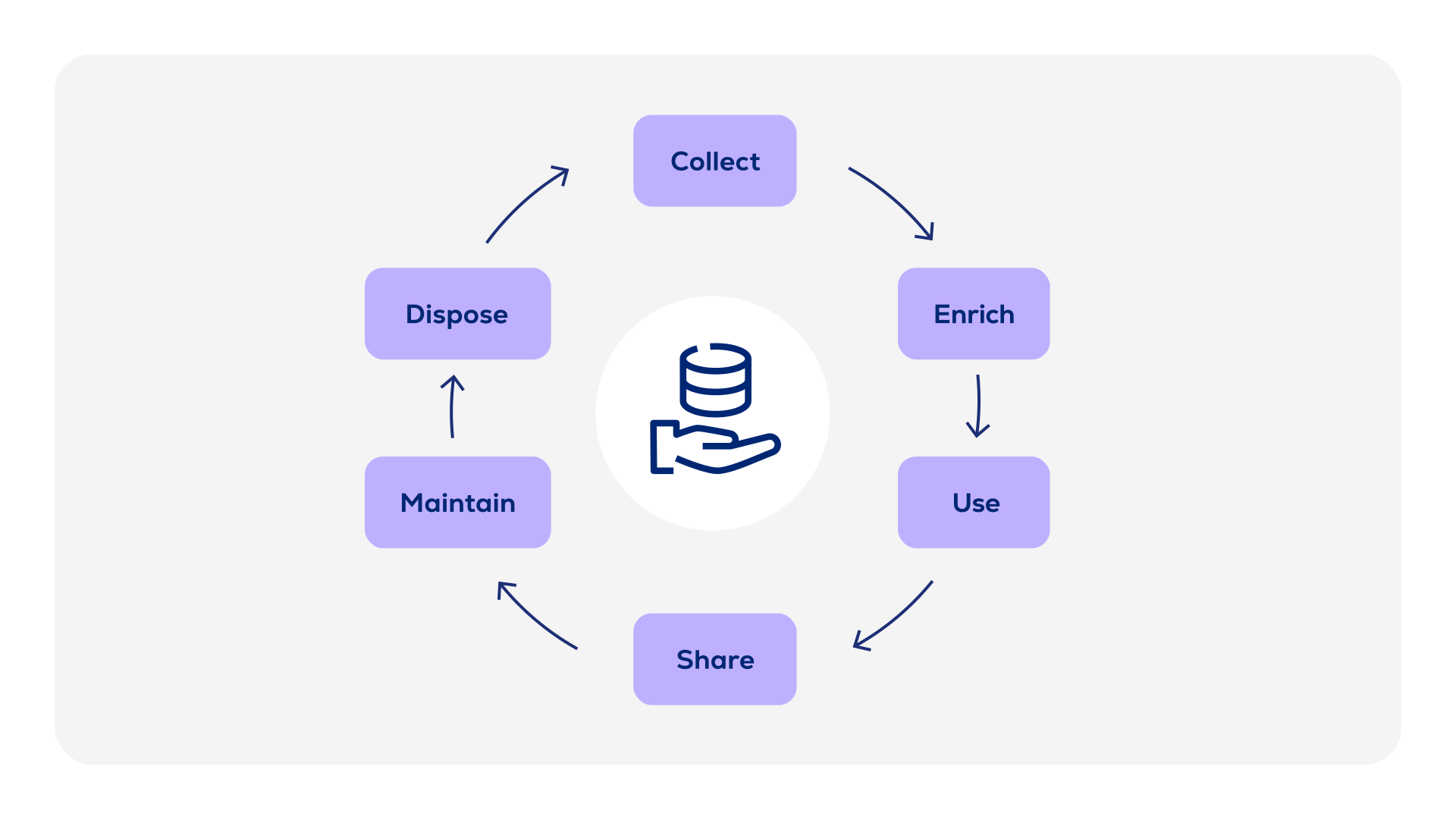
Reliable IT asset management data is created through an ongoing six-step cycle:

Collect: consolidate data sources
Enrich: normalize, augment and classify
Use: manage compliance, licensing and cost
Share: make it centrally available and use it across teams
Maintain: validate, update and cleanse
Retire: archive or delete based on policy and requirements
usu_itam_seo-seiten_infografik_daten-lebenszyklus_1920x1080px_en

Steps to trusted data:

Involve stakeholders

 Who needs which information and for what purpose (ITAM, security, procurement, finance, IT ops and others)? 

Define a data strategy

Capture only the data you truly need to answer the relevant questions (minimum viable data instead of collecting data “just in case”).

Integrate tools

 Consolidate data feeds from discovery and inventory, directories, and cloud and SaaS systems using connectors and APIs. 

Normalize data

 Cleanse, identify and standardize data so it becomes comparable and ready for reporting. 

Manage access

 Provide sensitive asset data and, where applicable, personal data securely using role-based access. 

Present outcomes

 Package reports, KPIs and dashboards so stakeholders can quickly understand and use them in the right context. 

Data normalization: The foundation for reliable decisions

Bringing multiple sources together

When data comes from different systems, normalization becomes the critical step.

Filter

Keep what matters and remove noise without losing important records.

Standardization

Use consistent names and mappings (for example publisher, title and version) through a maintained catalog.

Transparency

KPIs and metrics for each process step make data quality measurable and visible.

Traceability

Drill-down to the raw data provides audit readiness and makes results explainable.

Scalability

Processes must scale with cloud growth, more SaaS and new data sources.

FAQ: ITAM Data Quality

What is ITAM data normalization?

ITAM data normalization is the process of transforming raw discovery data into a consistent, structured format. Discovery tools often report the same software or hardware in different ways depending on the source, operating system, or scan method.
Normalization standardizes vendor names, product titles, and versions so IT asset managers can accurately identify what software is installed and how it should be licensed. Without normalization, organizations cannot reliably calculate license positions or identify optimization opportunities.

Why is CMDB data often unreliable for IT asset management?

Many organizations rely on the CMDB as their primary asset repository, but CMDB data is often incomplete or outdated. The CMDB typically depends on discovery integrations, manual updates, or configuration management processes that do not capture the full lifecycle of software and hardware assets.
For effective IT asset management, organizations must reconcile data from multiple discovery sources and normalize asset records to create a trusted “golden record.” Without this reconciliation process, CMDB data alone rarely provides the accuracy required for compliance or cost optimization. 

How does discovery improve ITAM data quality?

Discovery tools automatically identify devices, software installations, and infrastructure across an organization’s IT environment. By scanning networks, endpoints, cloud environments, and virtual infrastructure, discovery helps create visibility into assets that may not be documented elsewhere.
However, discovery alone is not enough. To achieve trustworthy ITAM data, organizations must combine multiple discovery sources and normalize the collected data to ensure accuracy and consistency.

Why is ITAM data quality critical for software license compliance?

Software license compliance depends on accurate information about installed software, usage, and entitlements. If ITAM data is incomplete or inconsistent, organizations risk calculating incorrect license positions, which can lead to unnecessary purchases or audit exposure.
High-quality asset data enables organizations to maintain accurate Effective License Positions (ELPs), optimize license usage, and confidently demonstrate compliance during vendor audits. 

Learn more about USU Software Asset Management

If you want to turn the insights from the white paper into operational processes right away, from integration and normalization to reliable reporting and optimization, you can find more information here.