
- Home
- products subpage itam sam for sap software
SAP License Management






Why SAP License Management can be complex
SAP license management is widely considered one of the most complex areas in enterprise IT. Unlike many software vendors, SAP uses a combination of user-based licenses, engine metrics and contractual rules that vary from customer to customer.
One major challenge is named user classification.
Users are assigned different license types based on their roles and activities — but actual system usage often does not match the originally assigned license. This creates compliance risks and significant optimization potential.
In addition, engine and package licenses are measured using technical metrics such as revenue, document volume, or system objects. These metrics are not always transparent and require continuous monitoring to avoid over- or under-licensing.
Another critical factor is indirect or digital access licensing. When third-party systems connect to SAP, additional licensing rules may apply. Misunderstanding these rules can lead to unexpected audit findings and costly true-ups.
Finally, SAP’s License Administration Workbench (LAW) provides useful measurement data — but it does not deliver full transparency into contractual obligations or optimization opportunities.
As a result, organizations often struggle with limited visibility, growing complexity, and increasing audit pressure.
SAP audit & compliance risks
SAP customers must be prepared for regular license audits. These audits can be triggered by contractual cycles, organizational changes, or system transformations such as S/4HANA migrations. Without continuous transparency into user classifications and engine metrics, companies risk compliance gaps that often remain undetected until an audit takes place.
The financial exposure can be significant. Misclassified users, underestimated engine consumption, or indirect access scenarios frequently result in costly true-ups and unexpected license purchases. Proactive license management is therefore essential to reduce audit pressure and maintain contractual compliance.
SAP Licensing in S/4HANA migrations
The move to SAP S/4HANA significantly changes the licensing model. With the introduction of Authorization-Based Licensing and Full Use Equivalents (FUE), user licenses are calculated differently than in traditional ECC environments. Instead of measuring what users actually do, licensing is increasingly based on the permissions they are technically able to use.
At the same time, S/4HANA projects often expand digital access scenarios through new integrations, APIs and Fiori applications. Without a structured review of roles, authorizations and contract terms before and during the migration, organizations risk inflated license requirements, compliance gaps or unexpected true-up costs. Early license transparency is therefore a critical success factor for a cost-efficient S/4HANA transition.
What's the value of SAP License Management?
Avoid unnecessary license costs
Reduce audit risks
Save time with automation
SAM for SAP® Software key features
Optimize authorization-based licensing
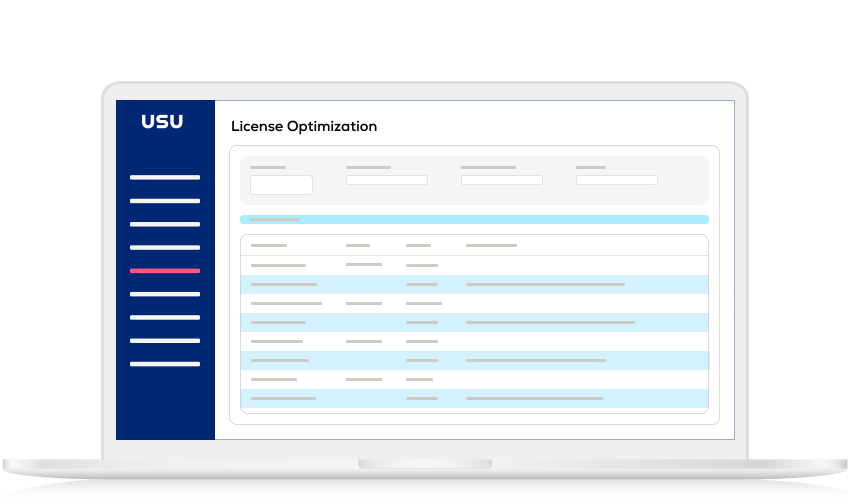
SAM for SAP® Software helps you get more value from SAP’s current license model, the authorization-based licensing approach. SAP introduced this model when it shifted to S/4HANA, and it’s now part of SAP Cloud ERP Private (RISE with SAP) contracts. With this model, your SAP user costs depend on the permissions users could run, not what they actually use. That can increase your license needs by 50 % to 150 % and raise your audit risk. Our tool reviews your SAP roles, permissions, and STAR classifications, then enriches them with real usage data to give you a clean, accurate license baseline—before you negotiate your SAP contracts.
Do you want to learn more about dealing with SAP cloud licensing? We pulled together most relevant insights and tips around Authorization-Based Licensing in a blog.
Identifier of inactive and duplicate SAP users
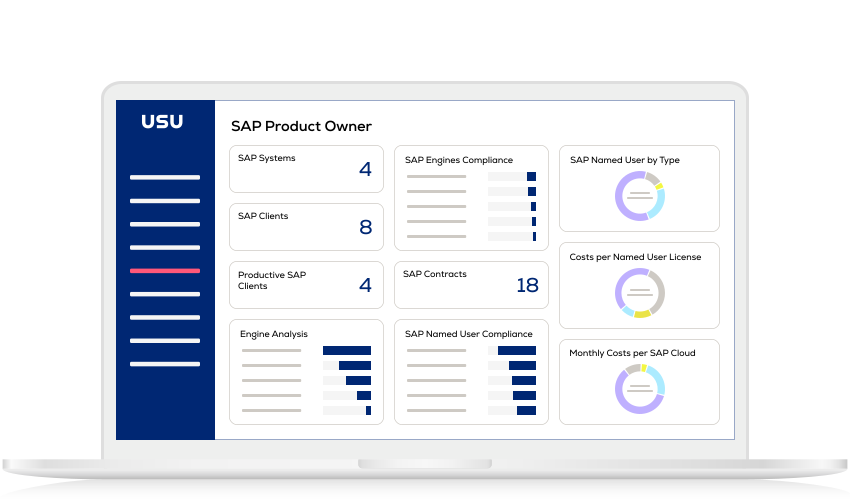
SAM for SAP® Software identifies inactive and duplicate SAP users using smart rules and algorithms. You can view and deactivate inactive accounts based on last logon data and detect duplicates through matching attributes like email, login or name. A global identifier helps consolidate users across systems and supports accurate LAW2 reporting—streamlining cleanup and reducing license waste with just a few clicks.
Flexible rulesets for SAP license optimization
SAM for SAP® Software uses flexible rulesets, including Fiori, to optimize SAP licenses based on usage, authorizations and contract terms. It automates license classification for all user types, supports quick adjustments and ensures results are reflected in SAP LAW reports. With the process manager, reconciliation runs regularly, keeping your license usage optimized and compliant.
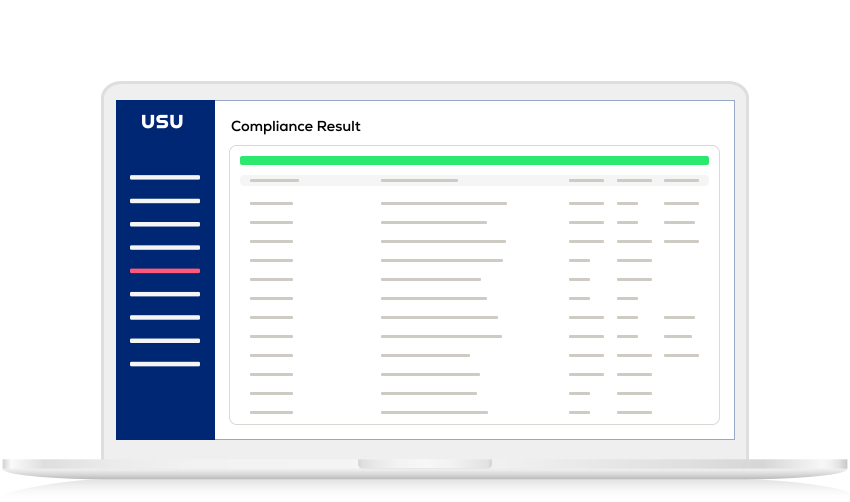
Automated compliance reports
SAM for SAP® Software automates the full SAP license process—from data import to license type assignment—using a customizable process manager. With regularly applied rule sets, companies receive up-to-date compliance reports. Dashboards and monitoring tools highlight issues and licensing risks early, helping you stay always compliant and keep your licenses under control.
Full control on SAP Digital Access
SAM for SAP® Software analyzes technical users and Digital Access data to identify high-cost interface users and financial risk. It imports and assesses “non-friendly” documents using the Passport Solution, offering more precise results than SAP estimates. You get a clear view of Digital Access costs per system, per user and per document type. Our SAP experts guide you through every step for smarter decisions.
Validate SAP Engine data
During SAP audits, user licenses often draw the most attention, but the real risks sit in the engine metrics. These license types don’t depend on people—they’re tied to usage volume or technical capacity like documents, transactions, cores or storage. Many organizations exceed these limits faster than expected because of growth, new interfaces or automation. The result can be expensive. Audit tools like USMM, LAW and LMBI measure these metrics automatically. Without clear documentation and control, the results can land well above what your contract allows.
SAM for SAP® Software gives you clarity. It maps your LAW2 engine values to the right contracts and metrics, spots incorrect measurements—which appear in more than forty percent of cases—and helps you fix them. You can import updated LAW2 reports at any time, so you stay compliant and act early before any data goes to SAP.
More Resources


Frequently Asked Questions
Why is managing SAP licenses so complex?
SAP licensing involves multiple license types, usage scenarios, and contract-specific terms. Frequent changes, like migrations to S/4HANA or indirect access models, add to the complexity—making it difficult to stay compliant and avoid unnecessary costs.
What’s the biggest risk of poor SAP license management?
Without full transparency, companies risk overpaying for unused licenses or facing compliance penalties during SAP audits. Missed optimization opportunities can lead to long-term financial waste and audit stress.
How can companies keep SAP license costs under control?
By using license management tools that analyze real usage, automate classification and regularly check compliance, companies can assign the right license types, identify savings and respond quickly to contract changes or audit requests.
How does automation help with SAP license management?
Automation eliminates manual effort, applies rules consistently and keeps your license data current. It supports continuous monitoring, simulates different licensing models and ensures changes are reflected in SAP systems—giving you control without the complexity.
How do our experts support SAM for SAP customers?
Our SAM experts support you right from the analysis of your current SAP contracts. We review your usage history and the technical and functional scope of your licenses.
In doing so, we evaluate the actual license usage of all users in the company. This allows you to see at a glance where there is over- or under-licensing and where redundancies can be eliminated.
On this basis, we work with you to optimize your license portfolio. We renegotiate unit prices, adjust quantities, and review more cost-effective SAP subscription models. In doing so, we consider all realistic options: the status quo, maintenance by a third-party provider, or alternative providers.
In addition, we work with you to develop a clear negotiation strategy. You benefit from a precise needs analysis, our in-depth understanding of SAP compliance requirements, and structured, smooth communication with the manufacturer.
Get in touch with an expert
Do you have questions about our offering? A quick call can be way more helpful than a long email chain. Talk to one of our experts to explore our products and see them in action.


Brian Riley
Sales Development
IT Asset Management
Send us a message
No matter if you like to partner with USU or just have a few questions.


