
- Home
- saas management
- futureproof it budget
Futureproofing your IT budget

Introduction
Over the last ten years there’s been an explosion in the variety of SaaS tools and capabilities flooding the market.
The current hype surrounding AI is further fueling the SaaS frenzy as organizations eagerly seek out cutting-edge solutions from new vendors. Market research reveals that, on average, companies utilize over 300 SaaS apps, collectively spending approximately $232 billion in 2024. However, a staggering 53% of these SaaS licenses go unused, representing a significant waste!
This dilemma leaves IT leaders and Business Owners with two core challenges in the SaaS and cloud realms: managing complexity while gaining transparency in the IT stack, and curbing rising costs as effectively as possible. But navigating the expansive landscape of SaaS applications can be daunting, with myriad optionsand associated costs to consider. Enter our insightful Playbook for SaaS CostOptimization!
We demonstrate how you can achieve immediate cost reductions by 30% and more while mitigating technology risks. Unveil these steps for immediate action:
-
Identify and eliminate unused accounts
-
Optimize application usage and subscriptions
-
Automate provisioning and deprovisioning
-
Reduce application sprawl
-
Proactively manage renewals
Tailored for CIOs, IT professionals, and business leaders, it offers actionable strategies to rein in escalating SaaS spending. By focusing on SaaS costs youcan swiftly effect change and regain control over your IT budget. Before divinginto these practices, let’s explore current IT trends and how organizations adopttechnology. This insight will clarify why SaaS costs are rising and resources areunderutilized.
How SaaS transformed IT management
It’s crucial for companies to regain tight control over operations and costs. But certain trends in IT management pose significant hurdles to quick, decisive action.
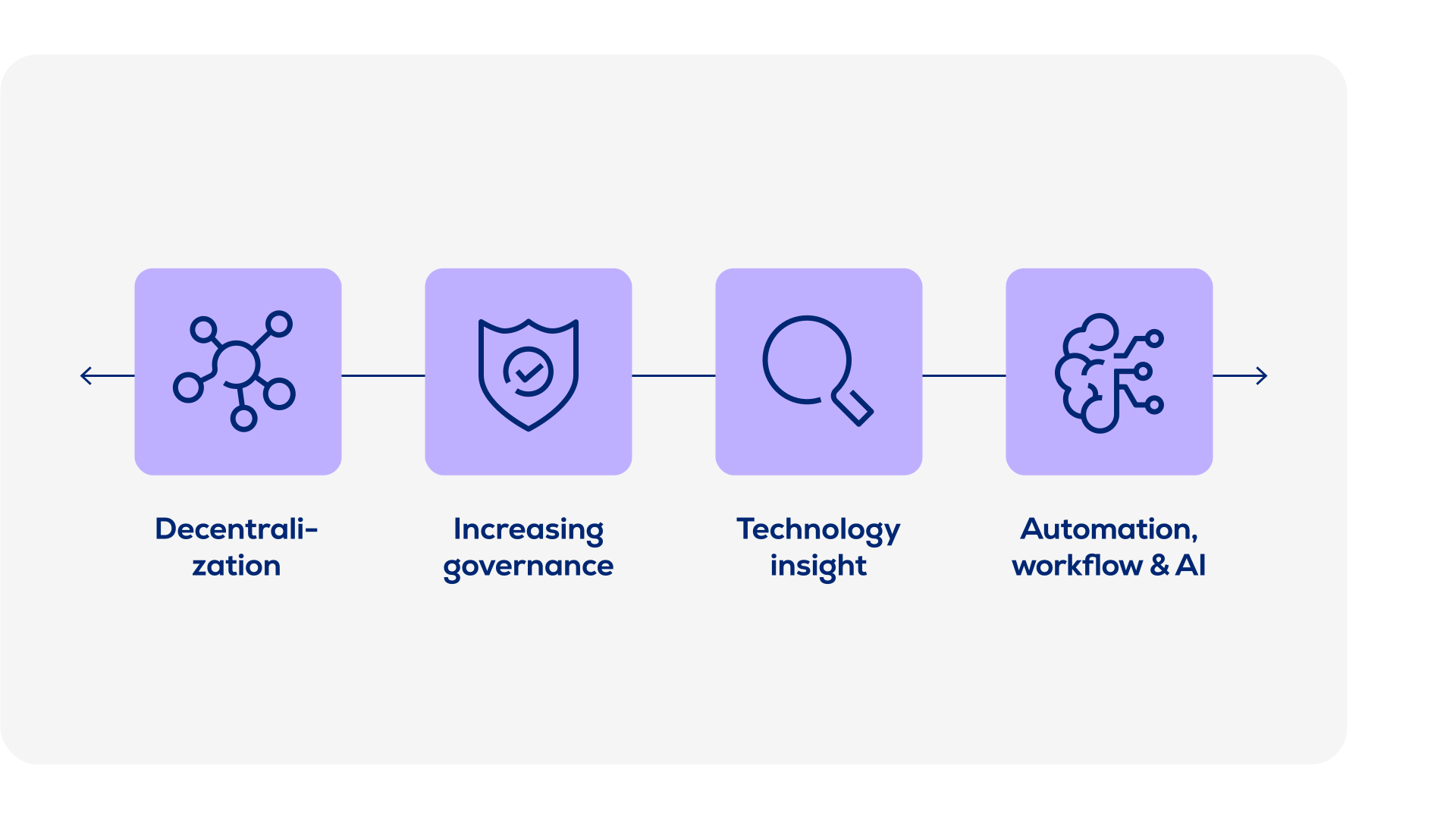
In recent years, what was called shadow IT is now seen as departmental or democratized IT. The traditionalIT department’s sole responsibility for technology is fading as technology becomes integral to every aspect of business. For instance, a data science team might be better equipped to choose a business intelligence or analytics platform than the IT department.
SaaS insights
SaaS apps in an organization are shadow IT
SaaS licenses go unused while companies use over 300 apps
Cost savings potential for top 10 SaaS applications in a company
Increasing governance requirements
Furthermore, legislation in almost every country is either in progress or already in effect to tighten technology governance, especially regarding data privacy and security. However, the decentralization of technology management outlined above makes it challenging for organizations to effectively oversee their tech stack.
The universal need for technology insight
With decentralization and increasing governance requirements, IT teams – and even broader business units – require deeper insight into their tech landscape.This has sparked a surge in tools and processes, often overlapping and causing technical and cost inefficiencies. For instance, Application Lifecycle Managers, ITAsset Managers, and Cyber Security teams all seek tools for universal discovery and inventory.
Automation, workflow, and AI
The rise of remote work, a push for better employee service, and staff reductions have spurred investment in automation, workflow, and AI tools. Many IT outfits now deploy AI-driven virtual service agents and leverage automations to streamline software and hardware delivery, mimicking the seamless online retail experience employees expect.
Impact on IT governance and processes
These trends in IT Management and how organizations consume technology have led to several impacts on IT Governance.
Application sprawl
With departments and individuals making theirown technology decisions the inevitable outcomeis application sprawl. Many solutions all doing moreor less the same thing. This is inefficient from a cost,productivity, and governance perspective. Morecontracts to manage, less standardization, moreapplication risks, higher costs.
Renewals management
This application sprawl means that organizations have many more renewals to process. Where software spend often previously took place via multi-year contracts with a small number of publishers SaaS has now completely flipped the model. Many vendors, manyproducts, purchased on a monthly or annual basis.Each renewal has an overhead in terms of scrutiny and administration, and the sheer volume – several renewals per week for most large organizations –means that inevitably budgets will not be spent efficiently.
Controlling shadow IT
Shadow IT remains a problem. It’s too easy for employees to find a solution, even a free solution, andto start using it at work. The presents IT with a problem given the increasing governance requirements noted above. It’s particularly problematic in highly regulated industries because it’s difficult to prevent a noncompliance. Traditional controls such as removing computer administration rights (the ability to install software) don’t work, because often SaaS apps require nothing to be installed.
How you will get out of the cost trap
IT teams face a perfect storm. They’re under pressure from CTOs, CFOs,and other senior leaders to boost IT visibility and cut costs amid globalchallenges. They’re grappling with a lack of control and insight due totrends like decentralization. Plus, unregulated SaaS spending is hamperingtheir cost management goals. The solution is SaaS management.
What is SaaS management?
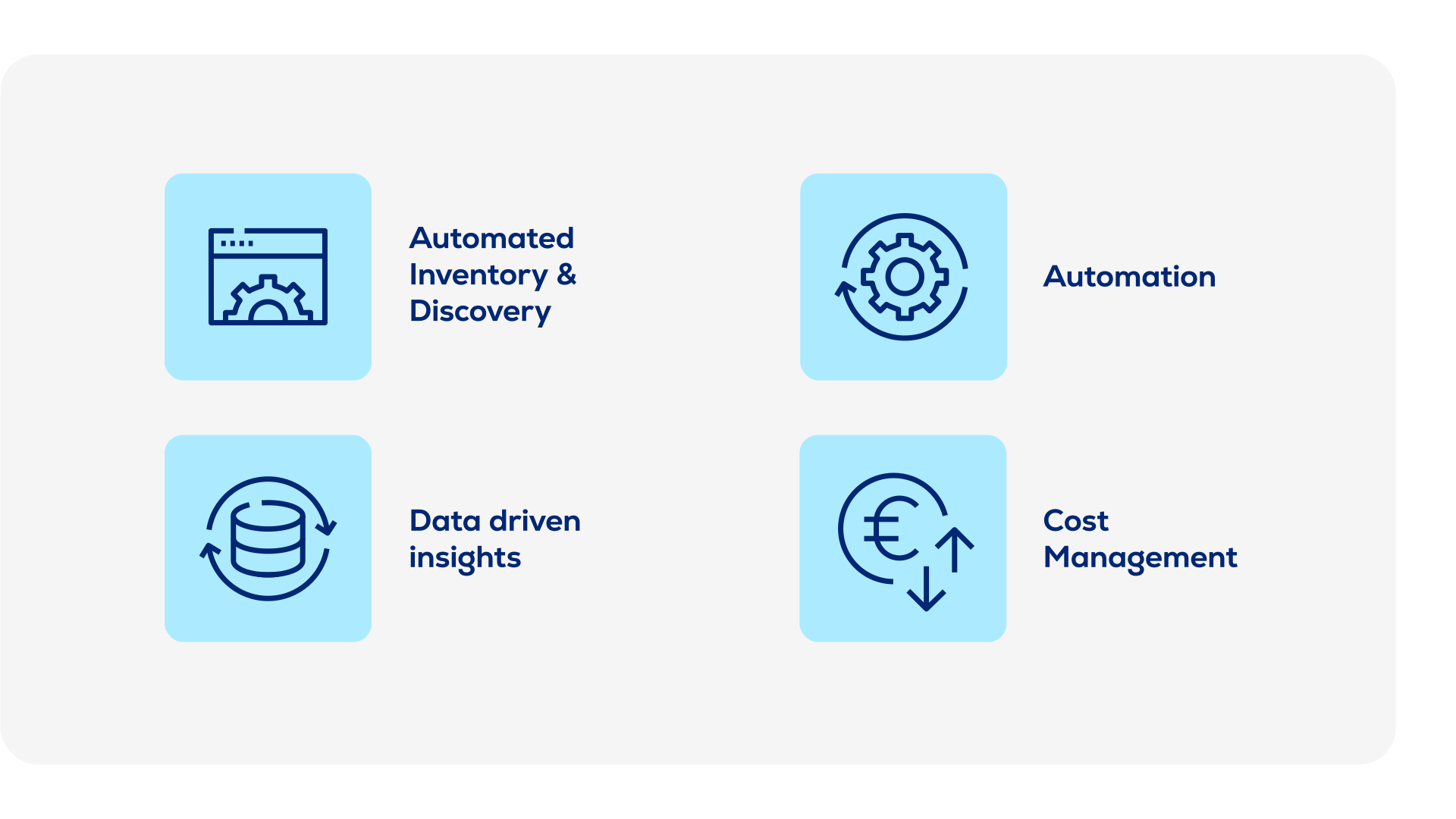
SaaS Management is a set of processes and toolsthat enable organizations to gain visibility of SaaSconsumption, derive insights, and take action. Keycapabilities include:
Automated inventory & discovery
By employing various methods, you can automate discovering and inventorying SaaS apps, whether they’re officially acquired by IT, departmentally sourced, or used by individual employees. Methods include connecting to app admin portals via APIs,leveraging Enterprise Single Sign On tools, using existing Software Asset Management tools, and analyzing expense data to identify shadow IT. SaaS Management Platforms (SMPs) streamline much of the work involved in managing SaaS consumption.
Data driven insights
SaaS consumption evolves rapidly, with new applications entering your organization regularly. This dynamic environment requires transforming data from discovery tools into actionable insights for decision-making. Reliable data facilitates engagement with stakeholders, who, in a decentralized model, are also application owners, to modify your organization’s SaaS usage efficiently.
Automation of provisioning/deprovisioning
Automation is crucial for effective SaaS application management. Previously, employees commonly accessed a limited set of applications like email and productivity software through a single network login.Now, they use multiple SaaS apps, leading to a rise in account and credential management. Automated provisioning and deprovisioning are essential for managing this influx efficiently, especially during employee turnover for security and cost control.
SaaS cost management
Most organizations prioritize SaaS management for cost management. The focus on SaaS cost management offers numerous opportunities for significant savings. Cost optimization in SaaS typically fits the 80/20 rule (also called the Pareto Principle).In this case, that means that 80% of your potential cost savings can come from 20% of your software stack. On average, you’ll want to look at your top 10to 15 tools in terms of cost. These will be your biggest levers to impact the bottom line.With ROI measured in days and weeks rather than months and years now is a great time to start looking at SaaS Cost Management and steps to take now.
Why SaaS cost management?
- Companies are gobbling up more and more SaaS apps these days
- Every app comes with its own price tag usually per person using it
- Contracts for these apps usually roll over every year
- With tons of renewals happening monthly SaaS Management teams have loads of chances to cut costs
Future-proof SaaS cost optimization in 5 steps
Identify and eliminate unused accounts
Kickstart your cost optimization journey by identifying and eliminating or reallocating unused SaaS accounts,unlocking immediate savings.
Let’s talk SaaS apps – they’re usually priced per person, making it easy to track and trim costs. But in today’s jobmarket, layoffs happen. First step? Make sure you’re notpaying for more seats than you need. Then, dive into a SaaS Management Platform to spot accounts assigned to employees but not getting used – a common issue, just like with old-school software.
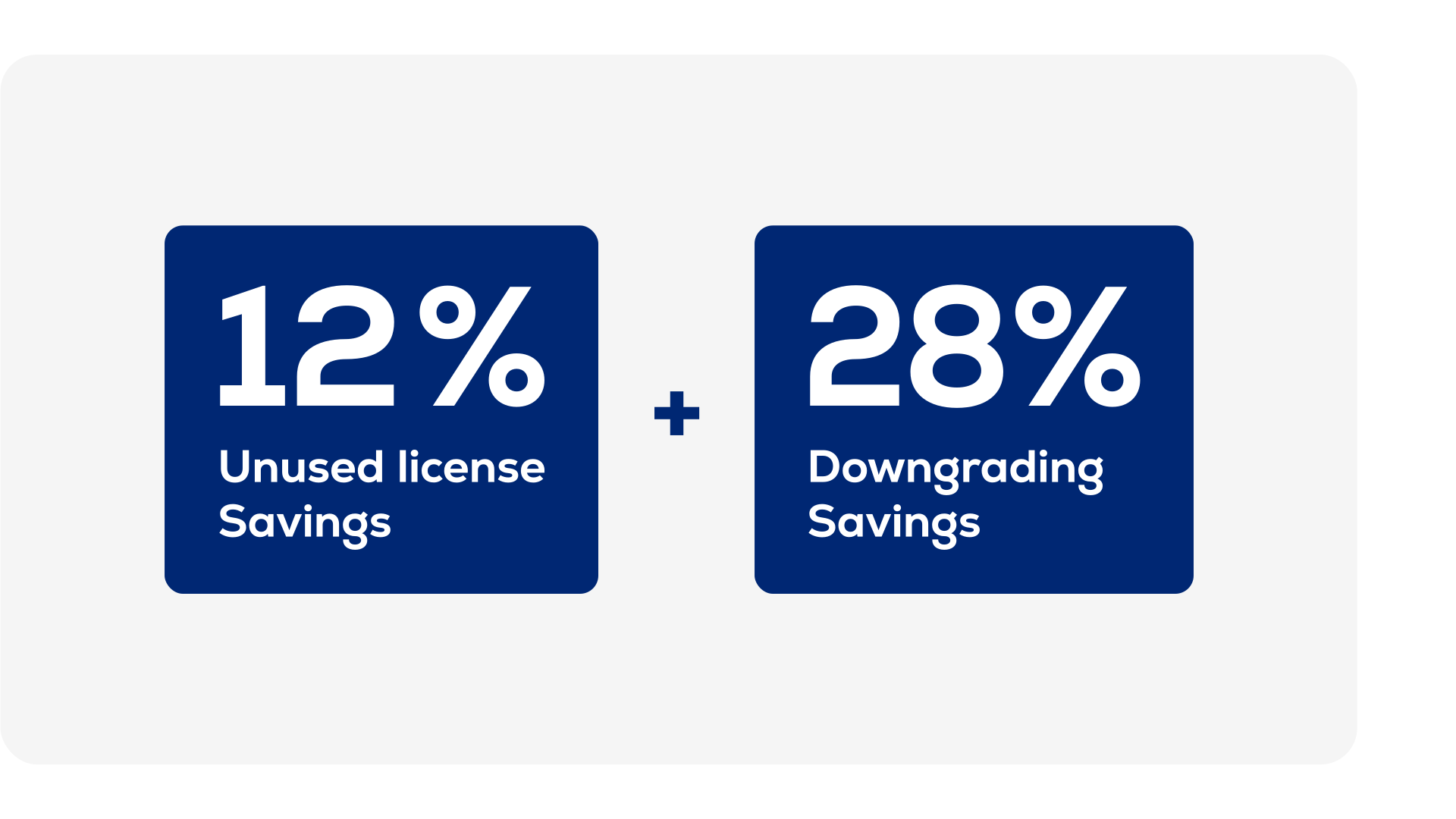
If a subscription’s gathering dust, unassign it and give it to someone who’ll use it, or adjust your numbers come renewal time. USU’s found savings of 7-22%on unused Microsoft 365 accounts in recent engagements.
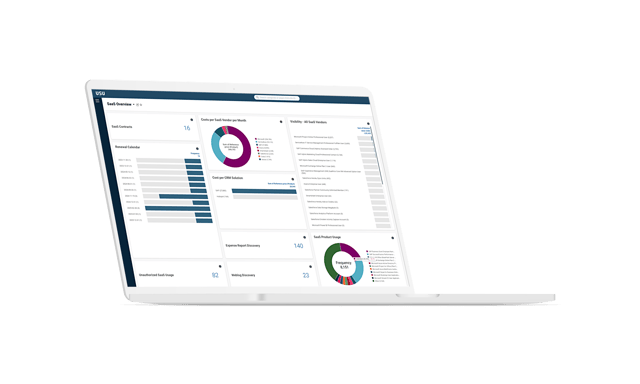
USU’s SaaS Optimization tool provides SaaS visibility of usage, costs and multiple real-time optimization options in one overview.
Optimize application usage and subscriptions
Analyze usage patterns to identify opportunities for downgrading subscriptions to more cost-effective options, ensuring that spending aligns with actual needs.
Besides axing unused subscriptions, you can save by giving some folks a cheaper license. Take Zoom, for instance. They’ve got Pro and Free options. The Freetier packs plenty of punch for most users – not everyone needs all the Pro perks. And hey, Pro runs about $150per year, so those savings can pile up fast.
In our recent projects, USU discovered that less than 20% of Zoom users needed those fancy paid features.That’s a chance to slash costs by nearly $110,000 come renewal time – a whopping 28% savings!
And you know what? A slick SaaS Optimization Tool can give you all that juicy usage info right down to the nitty-gritty feature level. It usually hooks right into the app’s Admin Portal. Plus, for SaaS apps with stuff you install locally like Adobe, a regular SAM tool can track usage too.
Automate provisioning and deprovisioning
Leverage automation to streamline the management of SaaS accounts, reducing operational costs and improving efficiency. Saving money isn’t just about cutting checks to software companies. The time spent manually setting up and shutting down SaaS accounts takes a toll on your IT crew’s efficiency and bottom line.
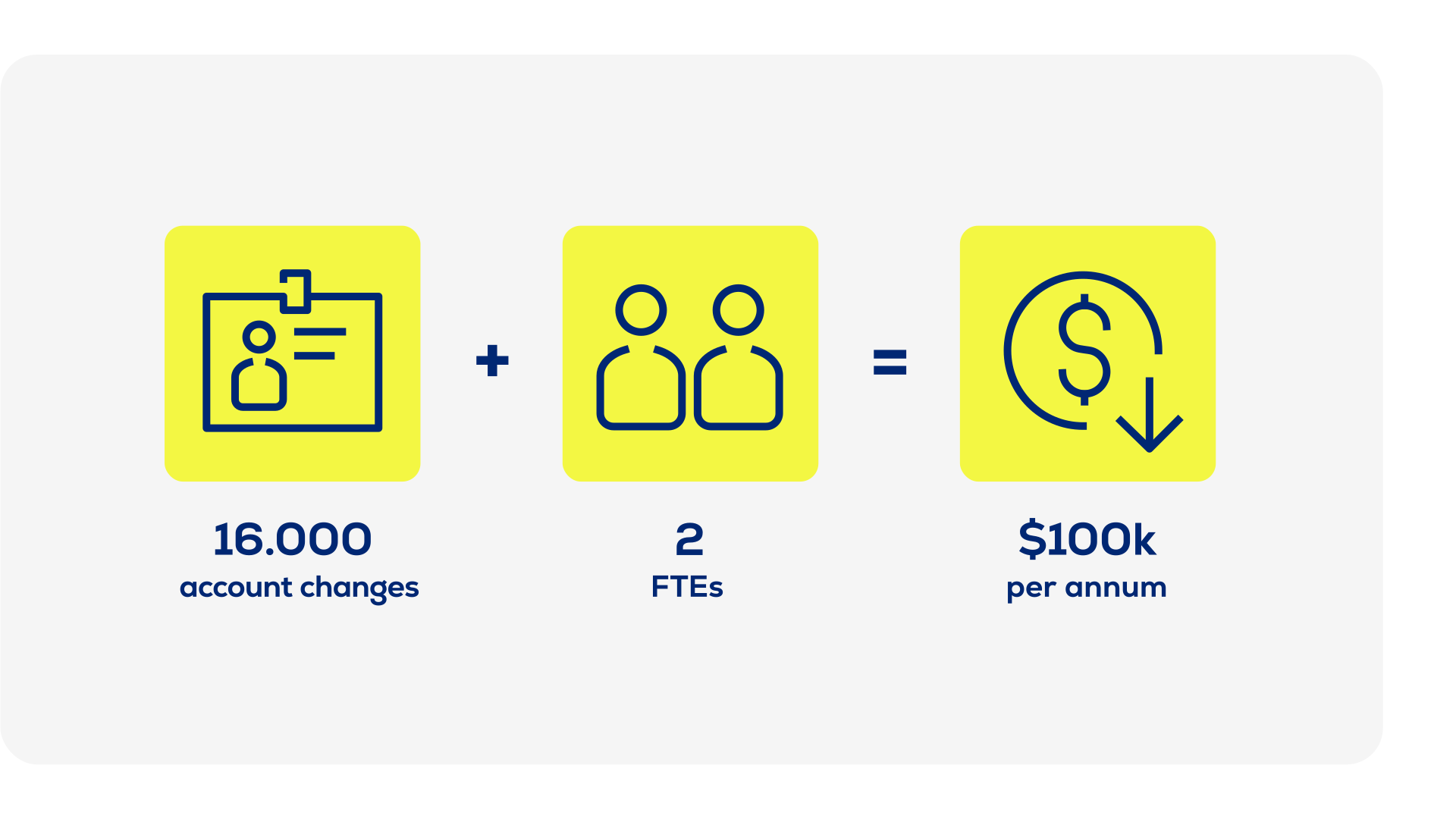
How much of a toll? Well, consider this: A Service DeskAnalyst in the US pockets around $48k a year. And yourteam needs the right apps at the right time to stay onthe ball. Picture this – a 2,000-employee outfit with 20% turnover, each person using 20 SaaS apps. That’s400 exits and 400 new faces annually, with a whopping 16,000 account changes to handle. One person can’t handle all that accurately and promptly. A manual approach would run you about $100k a year in salary alone, not to mention the productivity hit from on-account backlogs and bottlenecks.
Cost saving is not just about paying less to software publishers. The time required to manually provision and deprovision SaaS accounts has a big impact on productivity and overheads in your IT department.
Enter tools like USU’s SaaS Optimization– they automate the onboarding and offboarding drill, even snagging app approvals from managers. Heck, some outfits fully automate the process by setting usage limits that trigger account nixing. For example, ditching a SaaS app that goes unused for 90 days.This automation isn’t just about convenience – it saves you dough, too.
Reduce application sprawl
Consolidate applications to minimize redundancy and overlap, enhancing productivity, reducing risks, and cutting costs.
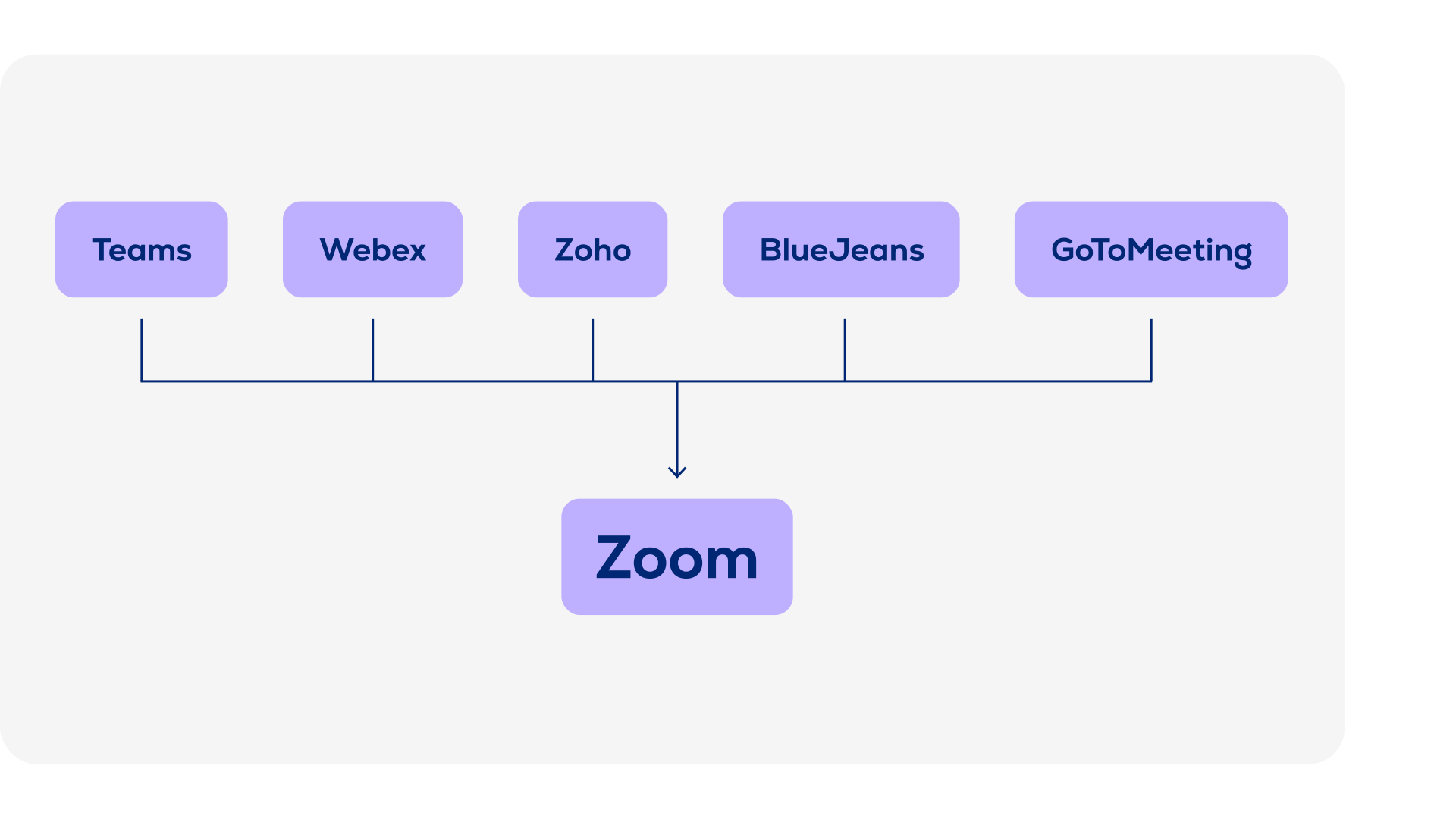
Let’s talk about the tech jungle in your organization.App sprawl happens when you’ve got multiple apps doing the same thing. It’s most common with file sharing, web conferencing, and project management tools. TheUSU Software Asset Management platform does the heavy lifting here, helping you spot sprawl early and work with your team to streamline apps.
But wait – we’re not saying you need just one app to rule them all. Your savvy crew might find niche uses for alternatives. Still, fewer apps mean less complexity, better teamwork, and lower risks and costs. And hey, having one standard app? That’s a powerful card to play when you’re negotiating big software contracts.
Proactively manage renewals
Adopt a proactive stance on SaaS renewals, using advanced insights to negotiate better terms, anticipate needs, and avoid last-minute decisions.
As you’ve seen throughout this guide, most organizations juggle multiple SaaS renewals every week. Each renewal is a chance to save, so making sure you’ve got time to seize that opportunity is crucial. That’s where a renewals calendar or pipeline comes into play – it keeps you on track.
But remember, you need to carve out time to chat with folks across the board to tweak license numbers and rein in app sprawl. For big-ticket apps like conferencing or file sharing, you might need a few months to shake things up. So, when you’re diving into a SaaS CostManagement program, cast your gaze ahead to next quarter’s renewals. That way, you’ll have the runway you need to score those sweet savings.
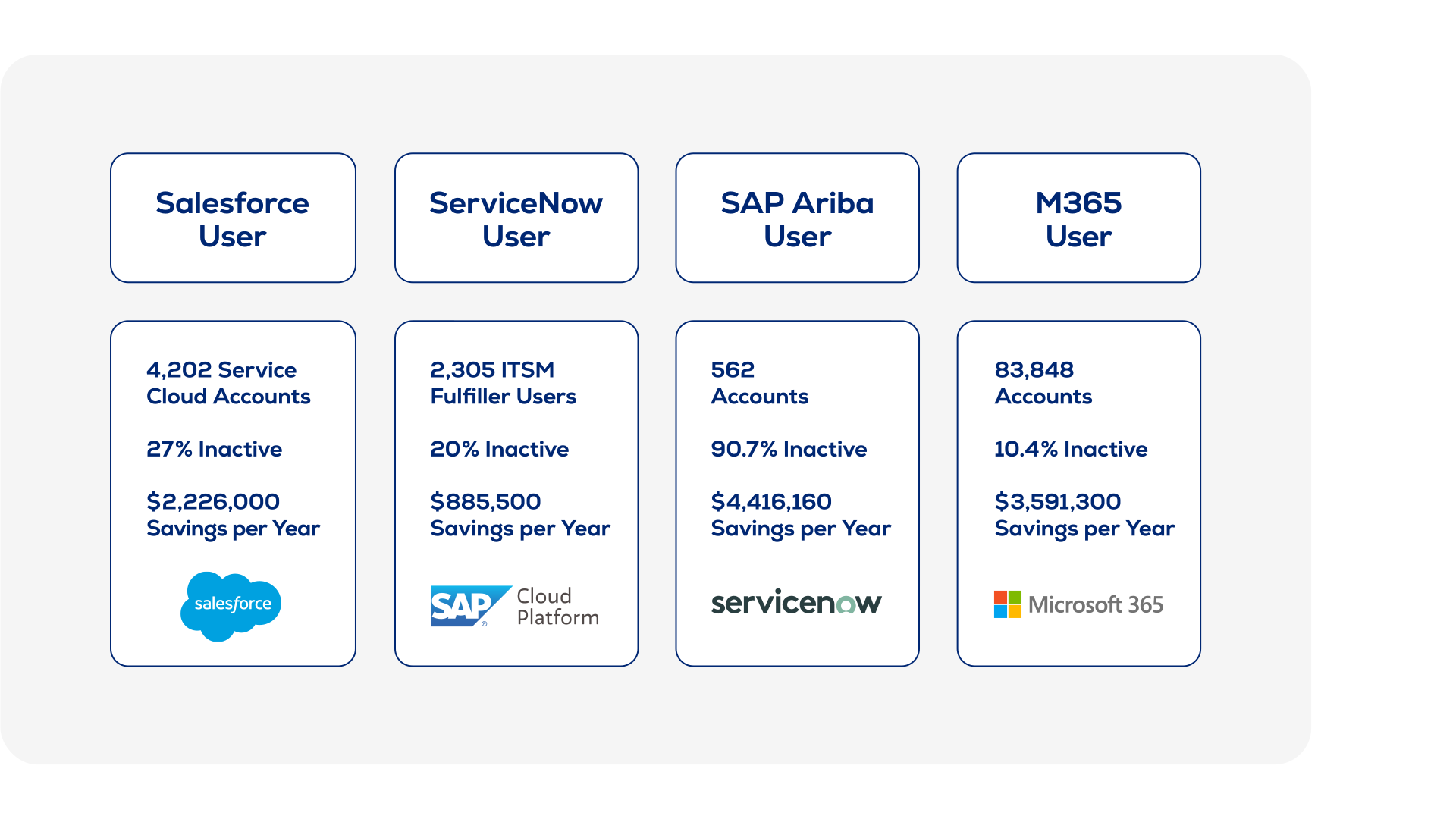
SaaS $avings in real numbers
This overview dives deep into SaaS Cost Management engagements, laying out the real deal on total cost reduction opportunities that USU uncovered for large enterprise customers.
Conclusion
Take control of your SaaS budget today
In this guide, we’ve delved into the financial strains organizations face and the governance hurdles IT teams encounter. This combo has fueled soaring SaaS expenses, demanding a serious shake-up. Enter the SaaS Management Platform – a game-changer in identifying app inefficiencies and slashing costs faster than other IT areas. It’s the perfect starting point.
But here’s the kicker – trimming SaaS costs isn’t a one-and-done deal; it’s an ongoing journey.By regularly sizing up your SaaS scene, implementing money-saving tactics, and fine-tuning your budget, you’ll ensure your SaaS investment packs the biggest punch for the best price.
Ready to unlock your SaaS budget’s full potential? USU’s comprehensive ITAM solutions offer the expertise and tools necessary to navigate the complexities of SaaS expenditure, delivering value and innovation at every step. Hit us up to learn more about USU’s SaaS Optimization Tool and Managed Services. Let’s turbocharge your SaaS investments together!


Get in touch with an expert
Do you have questions about our offering? A quick call can be way more helpful than a long email chain. Talk to one of our experts to explore our products and see them in action.


Brian Riley
Sales Development
IT Service Management
Send us a message
No matter if you like to partner with USU or just have a few questions.


